The path traced by Augustine begins with a simple, fundamental question, a question he puts to himself: You, who are you? He directs this question to himself because only he can answer it. The ancient Greeks maintained the opposite conviction, that only after death can someone be truly known and their story told, which renders autobiography futile. Any life can only be assessed and its story told from without, never from within; in retrospect, never in the midst. “One must look always at the end of everything—how it will come out finally.”1
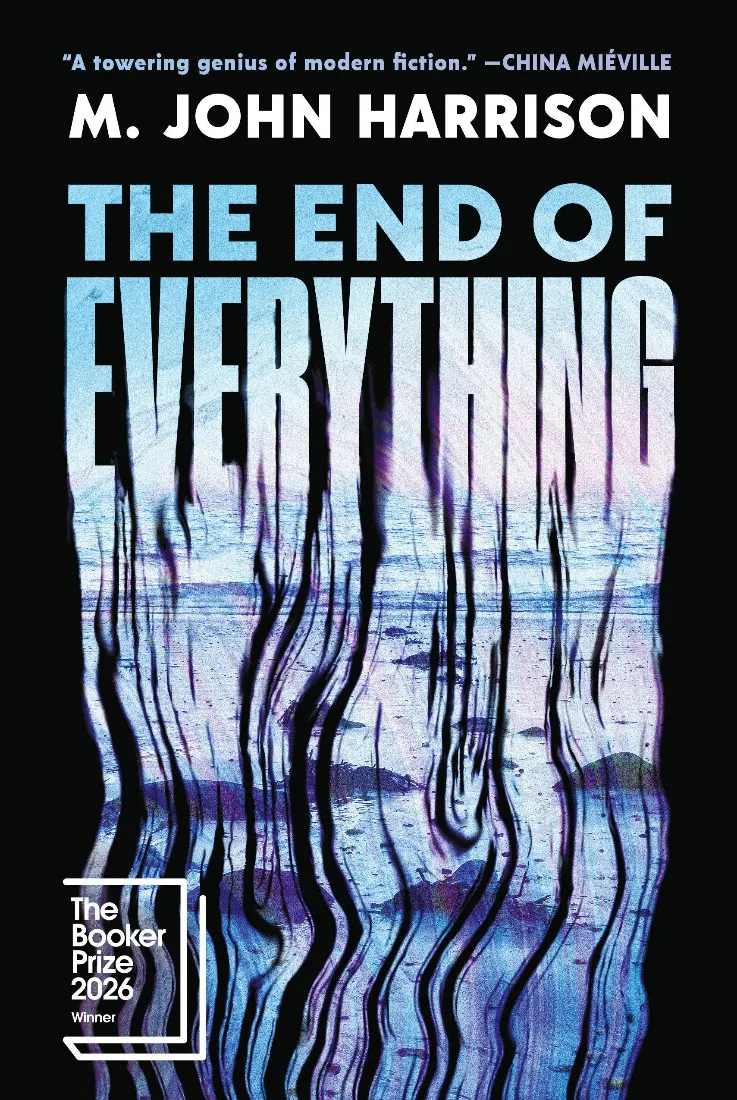
I'm reading M. John Harrison's The End of Everything, a sci-fi novel just over 200 pages. I seldom read sci-fi books, simply because I find a lot of it boring. Sure, the books have loads of fantastical elements but I often find those to scratch the surface of the human imagination.
On the other hand, there's the classics: Asimov, Le Guin , Gibson, Ballard.
I started reading this book while trying out my Boox Picco. I was instantly snared by Harrison's language: simple, thought-through. The story seems simple; Harrison may have put a lot of thought into the book. I love an author who doesn't try to be clever nor acts like they should be the all-singing, all-dancing shit of the world.
The rest of this post consists of quotes from the book, none of which should spoil anything for the reader. I highly recommend to buy or loan this book.
Music blared out of the bars as if there were still holidaymakers on the Strip. Indeed, in the parallelogram of side streets known as Dalston-on-Sea, there may well have been puzzled long-weekenders down from the London enclaves, where, drifting in patches like a kind of weak metaphysical fog, the disaster had failed as yet to make headway. What these academics and middle-scale arts entrepreneurs expected to find, as they ushered their families past the endless trays of common artefacts mudlarked from the intertidal zone, was difficult to guess.
Marnie had washed up there from London a generation ago, when the Strip was still a thriving arts community, before the crashed airliner raised its buckled starboard wing like a temporary modernist shelter across the gardens on the other side of the road.
She got back into bed, pulled the covers up and thought, I’m old and my nerves are bad. My nerves are bad. I’m old and my nerves are bad, until she went back to sleep.
They studied the horizon together for a moment, and she asked him what condition the sea was in down there that day.
‘Eventually it’ll turn into speech,’ Tennent said, without knowing why.
And, finally, addressing herself, perhaps, rather than Phillip: ‘Age is an immense sadness that seems to be folded into everything.’
New buildings began to appear, for instance – elaborate, not entirely stable parodies of 00s vanity architecture, which lasted a week or a month before toppling slowly away into a kind of dark blue air.
-
Meagher, Robert Emmet. Albert Camus and the Human Crisis. Pegasus Books, 2021. ↩