 The Vanilla OS logo
I've recently started to like using Linux again. Let me rephrase that: I've always liked Linux; I've recently found a couple of Linux distributions that feel like home.
Linux is the operating system. 'Distribution' is the same as 'flavour' as related to ice-cream flavours.
I've used Microsoft Windows as operating system for the past 2.5 years; to return to Linux feels sane.
I've just installed Vanilla OS on a computer. Vanilla OS is a Linux distribution, based on Debian (which is another Linux distribution).
Unlike Windows, a lot of Linux distributions are open source. If something's open source, it often means you can read, download, and configure the source code that makes a distribution. A lot of Linux distributions are based on other distributions. It all comes together. People cherry-pick a lot from different distributions and then create a new one for different reasons: some gamers love distributions that optimise gaming experiences. Other distributions are made for security, video editing, making music, etc.
If you feel like trying out a Linux distribution, I recommend DistroSea. It's a site that lets you pick a distribution and then running it via your web browser. Simple as that.
I installed Debian Trixie on another computer. Debian is one of the bigger Linux distributions, Trixie is the latest version at the time of writing.
Vanilla OS contains a few things that I consider to be good:
Vanilla OS is a Linux distribution that aims for higher security than other desktop Linux distros. It's built on Ubuntu but adds a twist: the core system files are immutable. This means that it's locked down from changes that third-party programs might make.
Linux dependency hell
One thing I've often experienced on Linux is 'dependency hell': you update or install something and suddenly software updates stop working due to a dependency lock; you can't update SoftwareX that uses ComponentA, because SoftwareY is also using ComponentA and can't work if ComponentA is updated. This has caused a few headaches for me, some of which have only been resolved by reinstalling Linux.
I've created a couple of cheat sheets that have helped me to fairly quickly reinstall a Linux distribution: a step-by-step list of everything I need to do to get a distribution to work and a list of web-browser extensions. When I follow the lists, it takes me roughly 30 minutes to get up to speed.
Mind you, that's nothing compared with the pains of using Windows. I can't even track how much time I've lost by needing to wait for Windows core components to unlock/start working enough for me to be able to start working.
Microsoft hell
I used to work as a Windows network admin; I used to be a Microsoft Certified Professional in Windows 95. I've worked in IT for more than a quarter of a decade. My first gig was as last-level support for Microsoft Office. One of my main gigs has been Windows maintenance.
I'm far less impressed by Windows today than when Windows 95 came out. Back then, software was about usability.
Windows 11, the latest version of Windows, appears to be the slowest version in 25 years.
Using something like Windows Explorer (now known as File Explorer) shows how Windows today is a corporate hellscape. For those of you who are lucky to not know what Windows Explorer is: it's a file manager, an application to open, move, copy, rename, and connect to network shares. That's it, right? Should work? Fuck no. Try working all day and then renaming a file on your hard drive. Windows Explorer may state renaming the file is impossible because the file is 'locked' without telling you what app's locked said file. This app has existed for nearly 31 years and still behaves like a kid in a supermarket regarding the most basic shit.
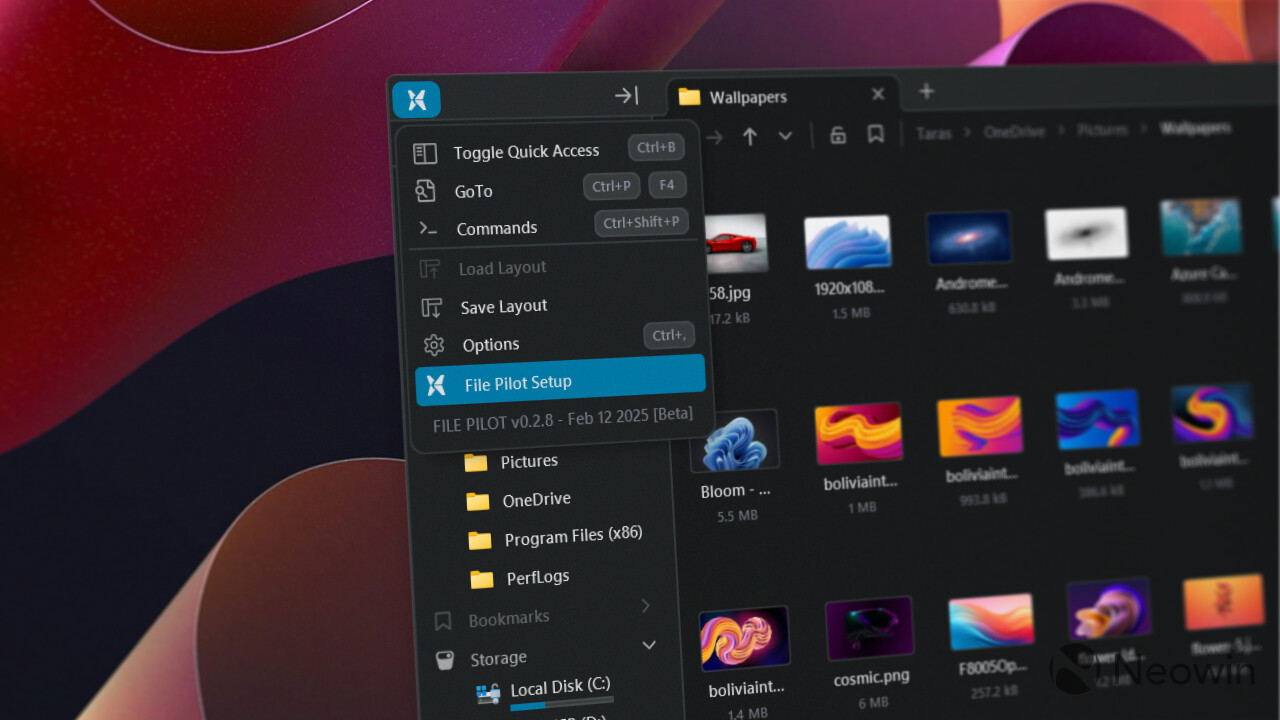
Compare Windows Explorer with File Pilot, an app that's designed to replace Windows Explorer. Fucking hell. File Pilot is developed by one person out of the will to create a better file manager than Windows Explorer; File Pilot takes very few system resources and does thing at lightning speed compared with Windows Explorer. And adds several good features. Yeah, developed by one person to replace something that's been developed by one of the biggest and most profitable companies on Earth, something that doesn't work. Sheeeeeeeyate.
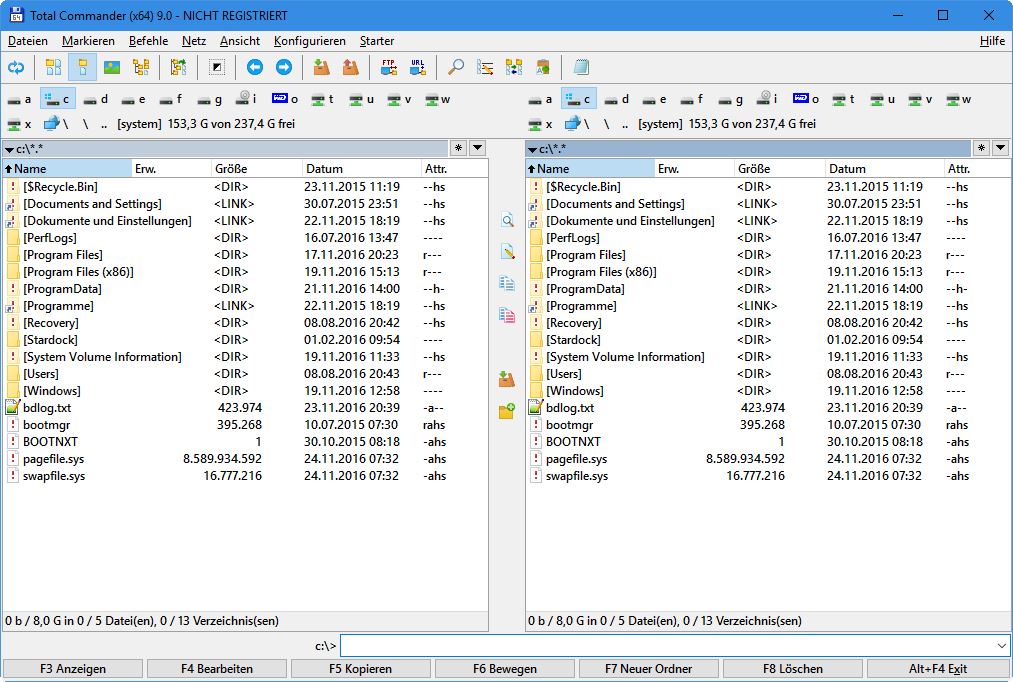
Then there's really old-school software like Total Commander that today supports every existing Windows desktop version since Windows 95. Usability and style doesn't just go away.
That's just one single example of a Windows app that I hate. Don't get me started on nightmares like Microsoft Outlook... OK, a couple of things:
- If you use Microsoft Outlook privately via IMAP or SMTP protocols, your emails, passwords, etc. are transferred to Microsoft servers1
- To use Microsoft Outlook is to consent to their selling your data to more than 800 different 'parties'2
That's just one thing. Don't kick me off on the implementation of AI in Office 365.
My second gripe is Windows Search. Holy fucking hell. Search in Outlook is an utter and complete nightmare - why not work on Windows Search rather than pouring your OpenAI money into your broken fucking OS, Microsoft? - but Windows Search is something else. Enter Everything. It's free. It's very fast. It helps you find files that you need. Thank fuck.
What about OneDrive4?
OK, one more gripe about Microsoft: Windows Recall. Fuck me. And I used to work for a company that built software that would keep tabs on what you were doing on your company machine...
Back to Linux
Anyway, moving from Windows to Linux often feels like a breath of fresh air: you're most often—I'll get back to this—not subject to data collection, you don't have to agree to an end license user agreement that says you're sharing everything you own with a company, you don't need to have AI pushed into your face at every corner...
People are dumping Windows for Linux.
Click this link to see a video that showcases a bunch of Linux distributions/desktop environments. I first embedded the video but it autoplays which is not OK. Sorry for that.
When I use Vanilla OS I feel glad. It's built on Debian. Usually, a Linux distribution comes with at least one kind of desktop environment; by default, Vanilla OS comes with GNOME, but you can switch to another kind of environment that suits you better. A desktop environment is the look and feel of your operating system; Plasma is another kind of desktop environment. They all come with their quirks and are often configurable in the extreme. When I used to run Manjaro (a Linux distribution) I used Plasma and could configure everything. People come up with the most weird looks and use cases. I love this about Linux. You can do whatever the fuck you want.
What used to turn me off about Linux is that snafus would require me to reinstall the entire operating system (which was bad); you needed to be a Linux nerd deity to be able to undo something bad or sort something out. I like troubleshooting stuff but not when in a hurry. Having to dig into forums and ask loads of questions could lead into something horrifying. The kind of horrifying that made you think 'You know, shelling out over 1000 USD on a Mac might not be a bad idea after all'. And yes, Macs are nowadays built on UNIX, which is a near-Linux operating system. Which is good. Macs are stable as hell. The hardware is brilliant.
I'm happy to have moved from dependency hell into a Linux distribution that is simple. The UI is sharp. There's no hangups, no weirdness to speak of. Sure, I'm a writer. I write. There's not a lot of dependencies in that. But the fact of the matter is: Linux lets me be productive more than by using Windows.
About the data-collection thing that I mentioned: Manjaro used to collect telemetry and still do, but they offer a tool to allow users to opt out3; personally, I think users should be given the opt-in version rather than opt-out.
In summary, I really like Linux. I recommend using Linux. If you need a big reason to use Linux, just check out how many distributions that don't come with AI installed and chucked at you...thank Bog. To boot, there's a lot of stuff that's great to start with, like syncing your phone with your computer in a variety of ways, for example, by using KDE Connect.
-
mailbox.org. “Warning: New Outlook Transfers Passwords and Data to Microsoft | Mailbox.” November 10, 2023. https://mailbox.org/en/news/warning-new-outlook-sends-passwords-mails-and-other-data-microsoft/. ↩
-
Edward Komenda, “Outlook Is Microsoft’s New Data Collection Service,” Proton, January 5, 2024, https://proton.me/blog/outlook-is-microsofts-new-data-collection-service. ↩
-
revwhiteshadow. “Manjaro Linux Introduces Opt-Out Telemetry With Manjaro Data Donor.” IT’S FOSS, August 15, 2025. https://itsfoss.gitlab.io/post/manjaro-linux-introduces-opt-out-telemetry-with-manjaro-data-donor/. ↩
-
Beschizza, Rob. “Everyone Hates OneDrive, Microsoft’s Cloud App That Steals Then Deletes All Your Files.” Boingboing.net, January 5. 2026, https://boingboing.net/2026/01/05/everyone-hates-onedrive-microsofts-cloud-app-that-steals-then-deletes-all-your-files.html. ↩