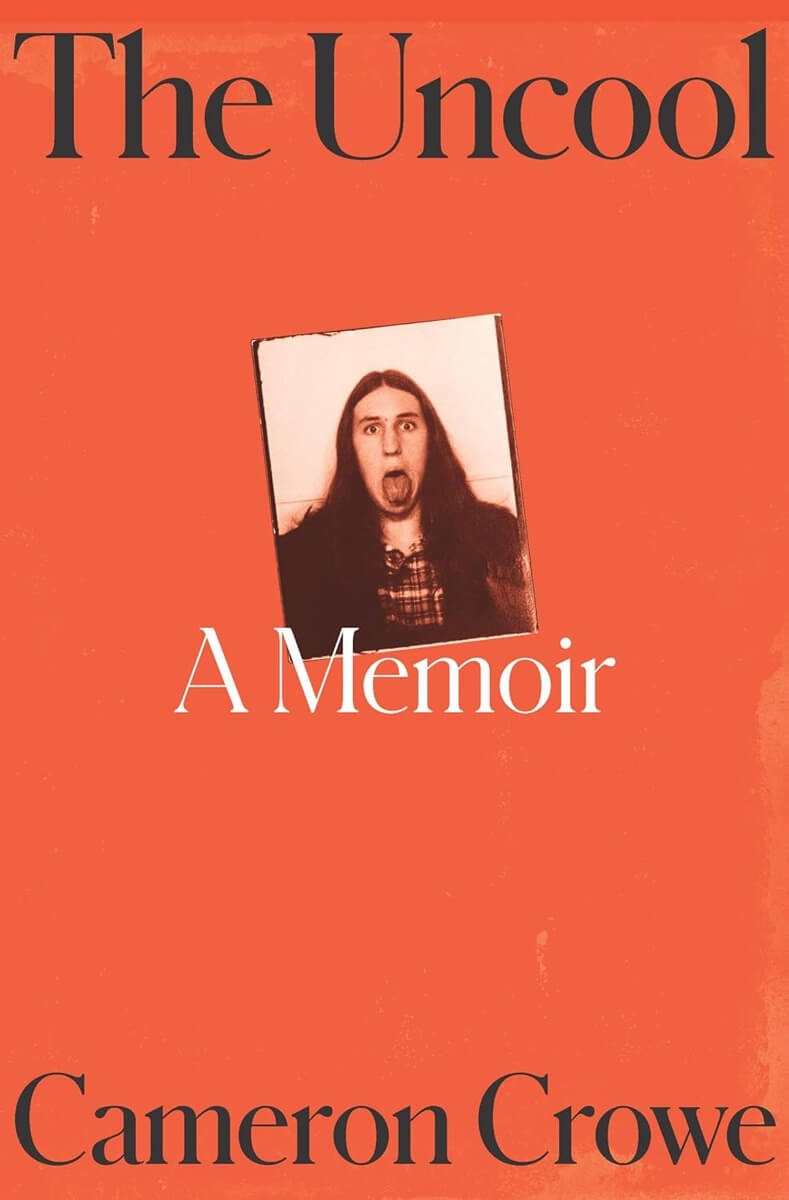
Cameron Crowe wrote and directed a film named Almost Famous. The film is legendary. It's about a young lad who's a teenager when he finds—or rather, everything finds him—music, action, love, sex, and writing. If you've ever grown up, chances are you'll like this film. If you've not yet grown up: see the film.
A short while ago, Crowe had an autobiography published: The Uncool. The title is likely from a phrase that his mentor and beyond-legendary music writer Lester Bangs used to describe how music writers aren't cool or 'with the band'. I'm two thirds into the book, which is wondrous and beautifully written; I highly recommend it as one of my favourites of all books I've read in 2025.
So, Crowe is great at writing about the coming-of-age process, wherever in life it may pop up. For us writers, to find your own voice can be a life-long process. Here's a short chapter from the book where Crowe describes exactly how he found a writing voice. As you'll see, this can apply to any thing for any person; Crowe is really so sweet at nailing stuff without being too on-the-nose.
How I Learned About Sex
In the fall of 1975, I received a surprise phone call from Rolling Stone writer-editor Tim Cahill. I was happy to hear from him. Cahill sounded playful, not at all the put-upon soul who’d helped me whip the Allman Brothers Band article into shape. He told me that the magazine was doing a theme issue about men. Muhammad Ali would be on the cover. If I wanted to write about my own life, not just about music, this might be a good opportunity. I immediately agreed.
“The subject,” Cahill told me, “is how you learned about sex.”
I was thrilled. It was clearly a vote of confidence from the magazine. I also wanted to impress Cahill, who’d driven me to add a whiff of mystery and poetry to the Allman Brothers story. I could feel myself standing straighter. Nothing wrong with a little bravado. I felt like one of those writer’s photos in Playboy. A guy with a pipe and the knowing look of an intellectual. Sure, let’s write about sex.
By nightfall, dread had arrived.
Tens of crumpled pages later, I had nothing. I had nothing but humiliating sexual near-misses to write about. Why did I want to write something so embarrassing? My first foray into autobiographical writing was as disastrous as the romantic encounters I’d been asked to document. I was learning that to be clever, you first had to be sophisticated. I was neither. Trying to write the article was like being lost in a room full of fun house mirrors, and I was a clown in every last one.
The deadline was Friday morning. I had to put something in the mail. By late Thursday night I was still under the covers of my bed, thinking about the excuses I could give Tim Cahill the next morning. I decided on a kitchen accident. Something that made typing impossible. No, it had to be better. Bronchitis. Or better yet, pneumonia. What the hell, Rolling Stone was in San Francisco, they’d never know the real truth. The real truth was that my entire sense of confidence had been based on my writing about music. The last thing I wanted to write about were my checkered experiences with sex.
I crawled out of my bed and decided the only path was to just put words on a page. Something. Anything. They’d reject the piece, of course, but at least I wouldn’t have chickened out. I typed out eight embarrassing pages. There was freedom in knowing how amateurish and confessional it was. No one would ever read it beyond an editor or two.
I wrote about how I learned about sex from my mom in a laundromat. Her explanation was so clinical that I thought intercourse was a medical act to be performed in a doctor’s office. I wrote about my doomed forays into dating, about being pale in a San Diego school where tanned surfers were king. I wrote about how I’d invited my secret surfer-girl crush, Karen Wilson, to see Fleetwood Mac and Savoy Brown at the San Diego Community Concourse. She said yes, and I knew I would impress her because I was going to interview Fleetwood Mac backstage before the show. We attended the show together, and she sat nearby while I talked with Mick Fleetwood, John McVie, Christine McVie, and then-guitarist Bob Welch.
Halfway through the interview, a tall and rugged blond Fleetwood Mac roadie entered the dressing room. He asked the extraneous hangers-on to leave, giving the band their necessary privacy. His eyes met with Karen’s. “Let me get you a better pass,” he offered. “Come with me.” I didn’t see Karen again until Spanish class the next Monday. She thanked me for a great night—with someone else.
Two days later, I picked up my bedroom phone to hear someone laughing. “Cameron, it’s Cahill.”
“I’m sorry.”
“Sorry?!” He was still laughing. “This is the best thing you’ve ever written. By far.”
“It’s embarrassing.”
“Exactly! And that’s the best part!” He was adamant. “It’s just disaster after disaster. We loved it!”
I was mortified. “I don’t even know what I wrote.”
“This is good stuff,” Cahill announced. “The embarrassing stuff is always the best stuff. We’re going to publish it, and we already commissioned a very embarrassing caricature of you nude. You’re gonna love it!”
He was still laughing when he hung up.
It was a day of discovery. I’d discovered that the once-stern Tim Cahill had a wonderful laugh. I’d also discovered my writing voice. The personal tone of that embarrassing article is now my favorite kind of writing. In fact, it’s the tone of this book.